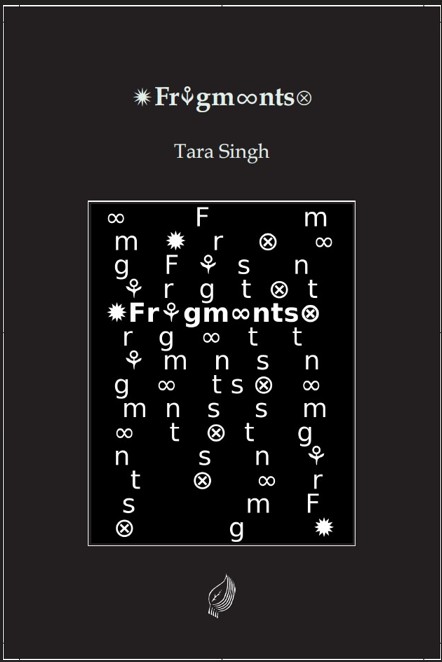
By Tara Singh
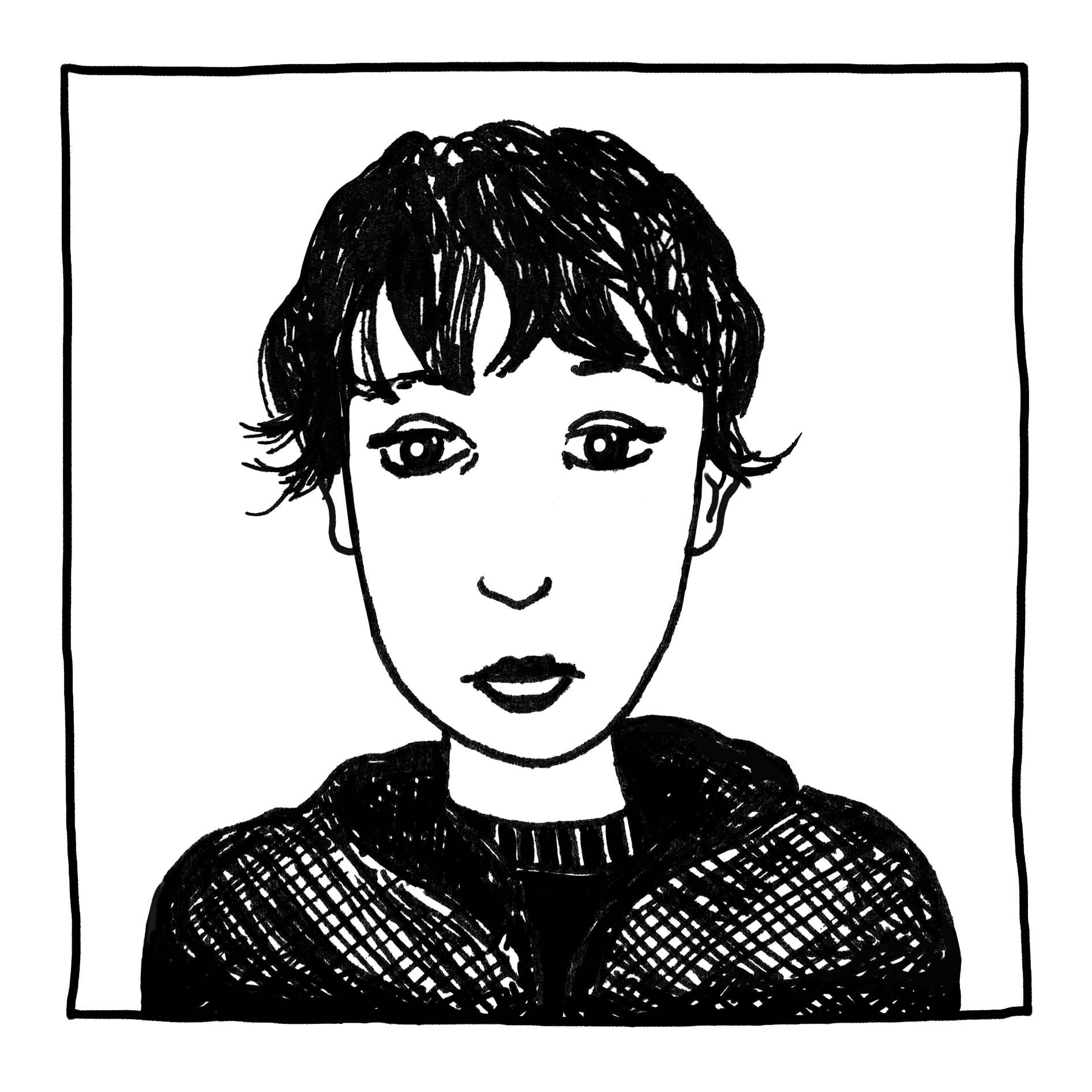
In 2024, I sent my poetry manuscript to Five Leaves during their open window for submissions from underrepresented poets in the East Midlands. I hit “send” with a mixture of hesitation and hope. I told myself not to expect much—that rejection is the most likely outcome for anyone submitting to a press, but especially for those of us who don’t always fit the usual mould of an “emerging poet.”
So when the acceptance email arrived—from editor and poetry-magic-worker Pippa Hennessy—I was over the moon. Pippa is the quiet engine behind the Five Leaves Pamphlet Series, and she immediately made me feel seen, not just as a writer but as a whole person.
Editing as a Gift
Working with Pippa on editing my pamphlet was a gift. Every poem was read closely, carefully. I could tell she cared about every line, every comma, every nuanced meaning. For me, editing can bring out the best of my autistic traits: the hyperfocus, the perfectionism, the way I can zoom in on small details until they’re honed and sharpened into something that finally clicks.
Our editing talks moved with their own rhythm, and by the time we reached the final versions, the poems felt stronger—not reshaped or tamed, but coaxed by Pippa and me into the shapes they were always trying to take.
Editing, for me, is not a neutral process. It is intimate, exposing, and can feel unsafe if the wrong person is holding your work. But in this case, I felt held. That experience alone is rare enough to treasure.
Living Online, Writing Online
I am mostly housebound. I can only manage to go out for short periods—and only to places I know intimately, at times when I can be sure there will be few people around. Crowds overwhelm me. Sudden noises or movements startle and disorient me. Being outside the house is costly: it drains my spoons, keeps me tense, hypervigilant, scanning for threats.
Inside my home, I can breathe. Online, I can meet people on my own terms. My real life—my community, my friendships, my poetry practice—lives on the internet. That’s where I attend workshops, where I learn, where I am understood.
It was through online workshops that I first found my way into poetry, and I’m especially grateful to Beyond the Spectrum for offering so many brilliant events in accessible formats. What began as participation has now grown into facilitation: I run regular workshops with Speak the Word and Shaded Writers, two groups that centre underrepresented voices. These online spaces have given me both community and a deep sense of creative purpose.
Being Upfront About Access
When I submitted my manuscript to Five Leaves, I was clear about my access needs from the very beginning. I knew that if the pamphlet was accepted, I would not be able to launch it in a traditional way—standing in front of a crowd, under the fluorescent lights of a bookshop, reading into a microphone while dozens of eyes stared back at me.
That scenario is not just uncomfortable for me; it’s impossible. I would shut down, melt down, or panic to the point of being unable to speak. I told Pippa this plainly: I would need an online launch.
And she listened. She didn’t treat my request as an inconvenience or an afterthought. Instead, she worked with me to make sure the launch could happen in a way that was accessible for me.
Why Beeston Library?
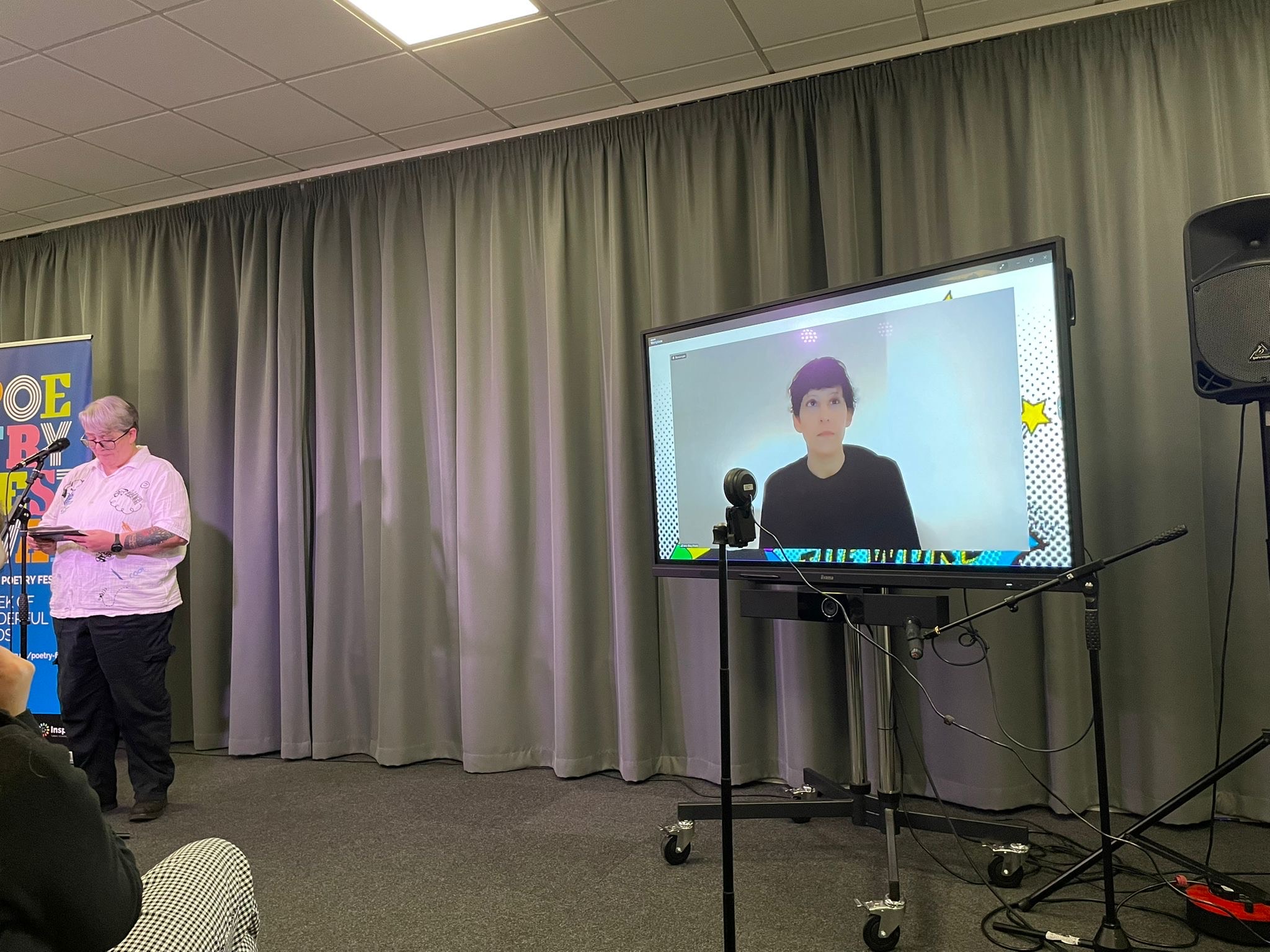
The solution we arrived at was a hybrid launch at Beeston Library. This was a beautiful compromise. I was already familiar with Beeston Library because I had attended hybrid poetry sessions there run by Leanne Moden. Leanne had modelled what accessibility can look like in practice: she made sure her events could be attended both in person and online.
That familiarity mattered. For autistic people, the difference between a known space and an unknown one can be huge. Beeston Library was not just a building; it was a place where I already felt a little safer.
A Triple Launch
The night itself was special for another reason: it wasn’t just my pamphlet being launched, but three of us together. Alongside my pamphlet, Five Leaves were also launching the work of Tony Challis and Ramisha Rafique. Tony and Ramisha read their poems live from the library, while I read mine from home.
That balance felt beautiful. The event was neither wholly online nor wholly in person; instead, it was something new, shared between the room and the screen. For me, it showed how hybrid events can weave together different ways of being in the world.
A Collaborative Effort
The launch came together through true collaboration. Pippa worked closely with my friend, poet & activist PJ Samuels, who supported in the venue, and my friend & facilitator Wyrd Lea, who supported online, alongside the generous team at Inspire (who run Nottinghamshire’s libraries). Together, they shaped an event that worked for everyone: me at home, the audience in the library, and those joining online.
The result? Forty-nine people attended online, and fifty-eight came to the library. For a poetry pamphlet launch, that is an extraordinary turnout.
But more than numbers, what mattered to me was this: I was able to perform my poems to almost a hundred people without leaving my house, without pushing my body and mind into panic, without collapsing under the sensory weight of a crowd.
I could be fully present. I could read my poems with joy. I could even enjoy myself.
Access as Community Care
That night taught me something profound: access is not just an individual adjustment. It is a form of community care.
When organisers take the time to create events that are hybrid, they are not only helping one person—they are extending hospitality to many. Disabled, autistic, chronically ill, housebound, neurodivergent, socially anxious, geographically distant—so many of us are excluded from cultural life because events are designed with only the non-disabled majority in mind.
But when events are hybrid, more people can come in. And when more people can come in, fewer people are left out.
Remembering the Lockdowns
During the COVID-19 lockdowns, we all learned to live online. We had to. We adapted quickly. We created new ways of connecting, learning, and performing through screens. And many of us discovered unexpected intimacy in those digital spaces.
But as restrictions eased, so many of those adaptations were abandoned, as if the lessons never mattered. Venues rushed back to “normal”—meaning in person only—forgetting the communities they had reached online.
I want us to remember. The pandemic was devastating, but it also revealed that accessibility is possible when we make it a priority. We shouldn’t need a global crisis to remind us that disabled and autistic people exist, create, and deserve to be present.
Beyond Measure
Was organising a hybrid launch extra work for Five Leaves and Inspire? Yes, a little. But the benefits were beyond measure.
I could share my poetry without trauma. My friends from around the country could attend, even if they couldn’t travel. People who might never have set foot in Beeston Library could be part of that night.
Accessibility is often framed as “special treatment,” but really, it’s about widening the circle. It’s about recognising that the “default” is not neutral—it excludes. Making an event hybrid doesn’t diminish the in-person experience—it enriches it.
Hopes for the Future
My hope is that the success of this hybrid poetry event will encourage other organisers to follow suit—not just for me, but for everyone who has ever felt the doors of a cultural event close in their face.
I want a future where access is not a reluctant add-on, but a joyful practice of community care; where autistic writers, disabled poets, chronically ill creators, and anyone who struggles with traditional spaces can still share their work widely.
We all deserve to be invited in. And the more people we invite in, the fewer will be left out.
Connect with my online poetry community:
Shaded Writers: @shadedwriters
Speak the Word: @spktheword
Get my debut pamphlet ✹Fr⚘gm∞nts⊗:
Physical copy from Five Leaves:
fiveleaves.co.uk/authors/tara-singh/
PDF (digital copy) from Etsy:
etsy.com/uk/listing/4376721904/fragments-poetry-pamphlet-pdf-digital