


Blog by Caroline Stancer
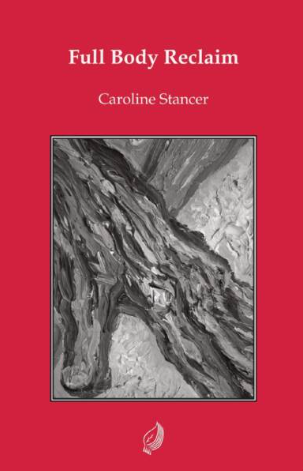
I sent my poetry pamphlet, Full Body Reclaim, to the Five Leaves Publications submissions window in June this year. Pippa Hennessy, who is a creative consultant and lead writer for Beyond the Spectrum, is also the Five Leaves Publications publisher and editor. After the excitement of my pamphlet being chosen for publication, I waited with some trepidation for the first edits from Pippa. It was a bit scary and a bit exciting. What if Pippa suggested many deep edits that I didn’t agree with? What if I felt like she hadn’t understood what I was trying to say? What if we disagreed on everything?
When the edits came, they were laid out and explained thoroughly in a way I could easily understand. Clearly Pippa had done this before.
As I began to read through them, I found that all the edits were thoughtful and precise, and responded to the poems on their own terms. I felt seen in what I was intending to communicate, and what it meant to me.
I’ve been lucky enough to receive detailed feedback on my poetry from many poets over the years, which has allowed me to develop and learn. A common experience in receiving feedback is that a number of the edits point to problems where I knew that there was something not right about a section of a poem, but I had looked the other way, whistling and pretending everything was fine. Pippa put her finger on all of these, saying this doesn’t quite work. Sometimes she had an answer I agreed with instantly. Sometimes I had to figure it out for myself. Often this meant going back into the workings of the poems- especially those where there was a set structure, like the repeating pattern of a sestina, or a particular rhyme scheme. As the poet William Carlos Williams wrote, ‘A poem is a small (or large) machine made of words.’ I had to take sections of the poems apart, clean and oil some areas, order new parts, and put them back together. Afterwards I felt more honest and the machine ran more smoothly.
Some edits I disagreed with. Some I stayed disagreed with, and Pippa respected that, after arguing with me (in a nice way) a few times. It made me understand my own intentions better, because I had to explain why I wanted to keep something the way it was. Other edits I agreed with at first and then gradually came round to. One poem was titled ‘Harm’, which I hung on to despite Pippa suggesting it needed a different title. Then I realised that the title felt important just because this was how the poem had arrived in my mind, and not because it added anything for the reader. Perhaps this was an example of the old advice to writers to ‘murder your darlings’- probably first said by Arthur Quiller-Couch- meaning not to hold tightly to favourite phrases or styles if they are not integral to this piece of writing. (Though rather than murder, I would prefer to hold my darlings lightly, or let them go, or write them down for use elsewhere.)
Pippa also suggested edits on areas I hadn’t seen as problematic at all. She suggested edits which improved them and which I never would have thought of. In the final section of Community: Rabbit, a poem about thriving after trauma, Pippa suggested swapping around the final line so that instead of Now we have ears like
sails and sweet snug pelts, the ears like sails would end the line and the poem, so that the feeling of community would end in a kind of lift-off. It meant I had to change some of the rhyming words in the final six lines of the Petrarchan sonnet pattern I was writing to (agghh), but I know it improved the poem.
Two heads are better than one (usually). I used to job share with a good friend I am very different from, and we helped each other to see our areas of weakness, or things we habitually didn’t consider. (Actually I think she helped me more.) I think having a good editor is similar. We are limited in what we can see, especially when something is very important to us, and another person’s eyes or ears or hands help us to ‘see’ further.
I felt like Pippa cared about the final pamphlet being as good as it could be as much as I did. I have been lucky enough to have had a lot of very helpful feedback, but I haven’t worked with someone before who was willing to work on poems and sections of poems over and over again, because the pamphlet series is her pamphlet series, and she takes her role as an editor as seriously as her own creative work. There’s a generosity in that which is admirable and a pleasure to be around. Some time ago we interviewed Pippa for the Dandelions Podcast, and she said that she saw editing as another form of creative work, done in collaboration with each poet.
When I’ve heard people talk about how their editor helped their work to be closer to what they had wanted to create, I thought it was a polite form of words, something people say at the end of books. I feel lucky to have experienced this form of collaboration now, and to understand a little more about it.
Having agreed with William Carlos Williams earlier that a poem is like a machine, I will now disagree. In a journal written for The Poetry Foundation, the poet Terrance Hayes wrote:
If the poem is an animal, we are not after perfection (the thing we are after if we view it as a machine), we are after what a parent is after. We are helping the poem discover its dream. Every poem has a dream.
Terrance Hayes, 2006
I think a good editor understands the dreams poems need to discover.
Notes
Terrance Hayes, Journal, Day One. June 2006 Journal, Day One | The Poetry Foundation
Arthur Quiller Couch, On the Art of Writing, 1916
William Carlos Williams, The Wedge, Introduction, 1944
Caroline’s pamphlet, Full Body Reclaim, is being launched by Five Leaves at Nottingham Central Library on Tuesday 3rd December. More info and how to book: https://beyondthespectrum.uk/event/book-launch-with-trish-kerrison-and-caroline-stancer/


