


Dr Clare Lawrence, Bishop Grosseteste University
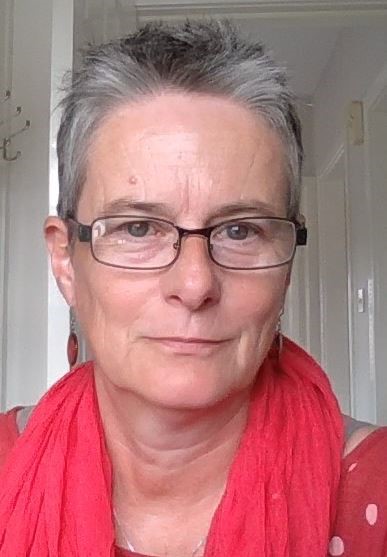
I was very fortunate in March to be one of the keynote speakers at Writing East Midlands’ Beyond the Spectrum Festival. This was a fascinating day of presentations and workshops around the subject of autism and creative writing. My own presentation discussed the use of metaphor to explore autistic lived experience and fed back on a recent research project with an autistic trainee teacher about the challenges of school placement from an autistic perspective. This research has now been published in the Journal of Inclusive Practice in Further and Higher Education, and can be accessed here (p. 87).
The use of metaphors (or ‘word pictures’) is a deliberately unconventional – in neurotypical terms – research approach used to reflect the experience of student teacher Quince as they navigate the challenges of teaching practice placements. The ‘double empathy’ issue explored by Damian Milton[1] can mean a communication divide between autistic and neurotypical understanding, and the art-based approach used in this study was designed to facilitate the sharing of autistic experience in a way that may be accessed by those who are not autistic. Furthermore, the use of metaphor as a way of sharing autistic experience both challenges stereotypical preconceptions that autistic people are universally concrete in thinking and celebrates autistic thinking as an effective means of knowledge creation.
“…the art-based approach used in this study was designed to facilitate the sharing of autistic experience in a way that may be accessed by those who are not autistic.”
Inclusive research that foregrounds the voices of those under discussion has gained ground in recent years, challenging notions of who should ‘own’ research. Increasingly, the value of insider perspectives and collaboration is being recognised. The shared autism of this study supported the co-creation of the data between (autistic) participant and (autistic) researcher. Together, we made notes, sketches and diagrams over several sessions to support our developing conversation and understanding. These ‘jottings’ were then collated and further amended, clarified and added to by us both, both regarding what had been said and what had been meant.
We then worked together to identify themes and to clarify the meaning of what had been discussed using the concept of metaphors or illustrations of meanings. Working cooperatively, we shared, discussed and developed the imagery described. This imagery was then translated into visual form by artist John Rimmer, and the results further explored and discussed by both co-creators and the artist.

What emerged is a created document, a combined output edited, amended and expanded from the many conversations and discussions. This centres around five images: a drowning man being ‘revived’ by having a bucket of water (marked ‘help’) thrown over him; someone using a Portaloo with the door swinging open; a fish with frogs’ legs escaping from a sardine can; three variously dressed people sitting together on a sofa; and someone rummaging through a bin for broken masks.
Through these images it becomes clear that Quince feels that they did not so much fail to become a teacher, as fail to become a neurotypical teacher. Many elements – the perceived need to mask, the rejection of being packed neatly into the sardine tin – convey a feeling of being different and of not being accepted as such. Quince is clear that the help they were given, although kindly meant, was often unhelpful to them with the water to revive the drowning man a potent metaphor. Equally, and as importantly, the solutions that they found for themselves were rejected. When they chose to spend time in another department the ‘fish’ did not like that they had grown frog’s legs and tried to move away. The intensity of the teaching day is vividly conveyed by Quince through the Portaloo image, which positions their autistic need to ‘reset’ within a fundamental, biological context. The door swinging slowly open on this lack of time or privacy to expose their vulnerability is a compelling one.
Quince gives clear indication of what it feels like to be accepted and to be a part of a community through the image of the various people on the sofa, all facing the same way, all different but contentedly together. Poignantly though, the challenge of projecting a false face to the world and the hiding of true identity is described with clarity through the familiar metaphor of autistic masks. Quince is certainly not unique as an autistic person who feels they have to hide their autism, and what is powerfully described here is the range of masks that might be worn, and the pain of having to ‘re-mask’.
In practical terms, some simple suggestions that emerge from this study might include the recommendation to ensure that help offered is actually helpful to an autistic person as providing neuronormative support may be counterproductive and may rather be a further source of stress. The requirement for privacy and ‘down-time’ for recovery and reset is clear, as is the advice to trust the autistic person’s own strategies to support their own wellbeing. Respect for autistic individuality as expressed through clothing, mannerisms, speech patterns etc. also emerges as important. Some autistic individuality may ‘look autistic’, but why should that be perceived as negative?
“…some simple suggestions that emerge from this study might include the recommendation to ensure that help offered is actually helpful to an autistic person as providing neuronormative support may be counterproductive and may rather be a further source of stress. The requirement for privacy and ‘down-time’ for recovery and reset is clear, as is the advice to trust the autistic person’s own strategies to support their own wellbeing. Respect for autistic individuality as expressed through clothing, mannerisms, speech patterns etc. also emerges as important. Some autistic individuality may ‘look autistic’, but why should that be perceived as negative?”
What is specific in this study is the need to support an autistic teacher to be the best autistic teacher that they can be, not merely strive to make them an adequate neurotypical teacher. Of course, the word ‘teacher’ in this case can be exchanged for almost any role; the lived experiences of autism as articulated through the examples and illustrations in this study are both highly personal and entirely transferable. And perhaps full acceptance of autistic teachers as autistic might be a good start to facilitating society’s wider acceptance of the ‘autistic’ in all autistic people.
Lawrence, C., Reynolds, O., & Rimmer, J. (2025). “Watching the loo door swing slowly open”: using visual metaphors to explore autistic experience through the medium of PGCE school placement. Journal of Inclusive Practice in Further and Higher Education, pp.87 – 102.

[1] Milton, D. E. M., Heasman, B., & Sheppard, E. (2020). Double empathy. In Encyclopedia of autism spectrum disorders (pp. 1-9). Springer, New York, NY.


